
By Alexander Martinez
Naperville is growing fast—new development, rising housing costs, and ambitious infrastructure plans all signal change. But along with progress comes tension: when do decisions benefit the whole community, and when do they risk eroding what makes Naperville special?
The Pulse of the Neighborhood
In a recent city survey, Naperville residents ranked public safety, the local economy, and parks highly. But areas like mobility, affordability, and environmental sustainability consistently showed room for improvement. These aren’t just data points—they’re persistent reminders that growth must come with care. When people struggle to afford a home or can’t easily get around, quality of life suffers—and neighbors’ voices make the difference.
When Locals Speak, Change Can Follow
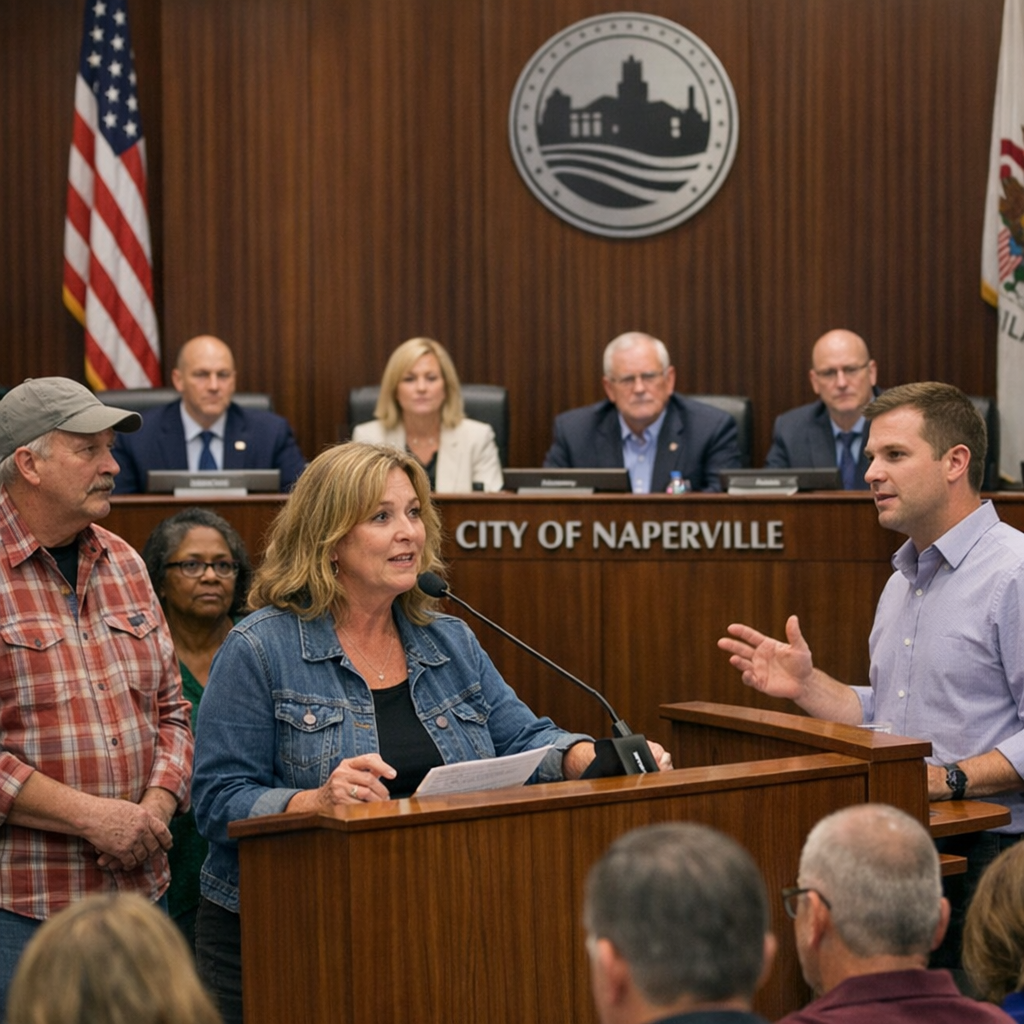
An oversize data center was proposed near a residential area in Naperville. Residents raised concerns over noise, health impacts, environmental risk, and proximity to homes and parks. After several meetings and petitions, the plan was rejected—an example of what local participation can achieve.
Trust, Transparency, and a Shared Vision
Initiatives like Naperville 203’s “Forward Together” framework aim to codify resident input into future policy. This involves stakeholders of all ages and backgrounds, generating feedback not just through surveys but in conversations where every voice matters. When trust is built and communities feel heard, change carries legitimacy.
What We Can Do Together
- Go to community meetings—hearings at planning commissions, zoning board sessions, school district forums. Showing up matters.
- Reach out—contact your alder or representative. Ask questions and request clarity.
- Organize—voice doesn’t have to be loud. It just has to be consistent and grounded.
Naperville’s identity doesn’t belong to any single subset of our population—it belongs to all of us: families, longtime residents, newcomers, students, workers. Growth isn’t just about new buildings; it’s about shaping the place we’ll call home for years to come. If we want a city that feels inclusive, sustainable, and livable, we need to do more than listen —we need to engage.