

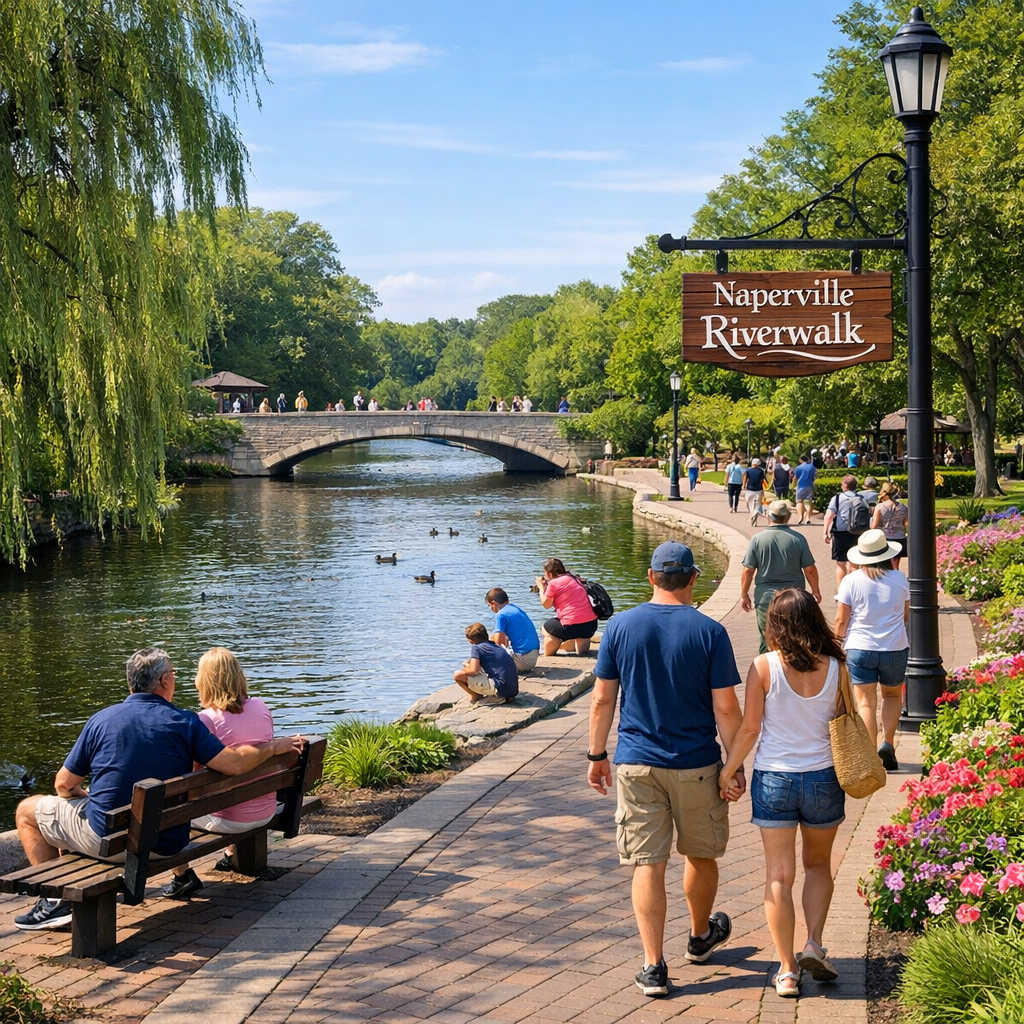
Naperville, Illinois, is a city that beautifully blends its rich history with a dynamic present. At the heart of this blend are traditions that have been cherished and celebrated by generations, fostering a strong sense of community and continuity.
The Naperville Riverwalk: A Community Jewel
Established in 1981 to commemorate Naperville’s 150th anniversary, the Riverwalk has become a central gathering place for residents and visitors alike. Spanning nearly 1.75 miles along the DuPage River, it features scenic paths, covered bridges, fountains, and public art. The Riverwalk serves as a venue for numerous events, from summer concerts to art fairs, embodying the city’s commitment to community engagement and natural beauty.
Naperville Municipal Band: A Legacy of Music
Since its inception in 1859, the Naperville Municipal Band has been a cornerstone of the city’s cultural life. One of its most cherished traditions is the annual performance of Tchaikovsky’s “1812 Overture” during the Fourth of July concert. This tradition began in 1977 when Mayor Chester Rybicki requested the piece, leading to a spectacular collaboration involving live cannons and church bells, creating a memorable auditory experience that continues to this day.
Sister Cities Initiatives: Fostering Global Connections
Naperville’s commitment to global friendship is exemplified through its Sister Cities program. A notable initiative is the Monarch Butterfly Garden at Knoch Knolls Park, established in partnership with the Naperville Park District. This garden highlights the environmental connections between Naperville and its sister cities, particularly regions in Mexico that are critical to the monarchs’ migration. Such initiatives not only beautify the city but also educate residents about global ecological interdependence.
Historic Landmarks: Preserving the Past
The city’s dedication to preserving its history is evident in its recognition of local landmarks. Properties like the Truitt House, designed by Harry Robinson in 1916, and the Old Nichols Library, Naperville’s first public library built in 1898, are celebrated for their architectural significance and historical value. These landmarks serve as tangible links to Naperville’s past, enriching the community’s appreciation for its heritage.
These traditions and initiatives are more than mere events or projects; they are the threads that weave together the fabric of Naperville’s community. They reflect a collective commitment to honoring the past, celebrating the present, and looking forward to a vibrant future.